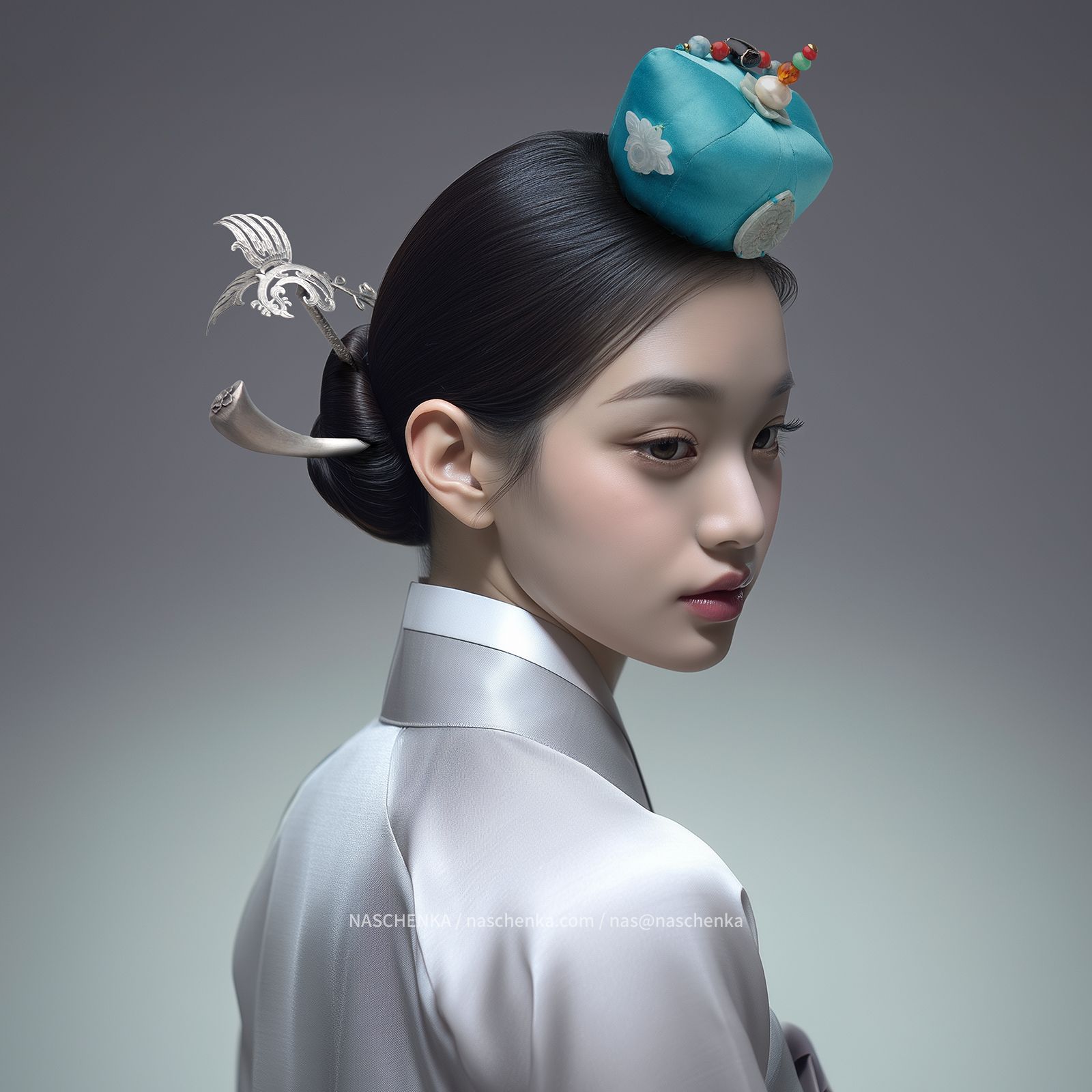
Korean heritage jewelry is jewelry made in Korea's own traditional craft — the ornaments Korean women and men wore with hanbok, and the earrings, necklaces, bracelets and rings made today in the same silver, stones and motifs. Its core is a family of pieces that belong to Korea alone: the binyeo through the chignon, the dwikkoji behind it, the cheopji on the parting, the jokduri crown, the norigae at the waist and the paired garakji on the hand. Around it stands the jewelry of every day: unmistakably Korean, even without hanbok.
Tradition is not merely explained. It is carried.— Kim Seong-eun
- Korean
- 전통 장신구 (jeontong jangsingu)
- Worn with
- hanbok — and, today, everyday dress
- Hair
- binyeo · dwikkoji · cheopji · tteoljam · daenggi
- Crowns
- jokduri · hwagwan · sangtu-gwan
- Body
- norigae · garakji
- Materials
- silver, gilt silver, jadeite, coral, amber, silk
- Golden age
- Silla gold; Joseon silver
- Meaning
- rank, marriage, protection, good fortune
The family of ornaments
Korean formal dress used jewelry as a set, each piece with its own place and its own job.
| Ornament | What it is | Read more |
|---|---|---|
| Binyeo 비녀 | The hairpin | binyeo.com |
| Dwikkoji 뒤꽂이 | The ornament behind the chignon | dwikkoji.com |
| Cheopji 첩지 | The parting ornament | cheopji.com |
| Jokduri 족두리 | The bridal coronet | jokduri.com |
| Hwagwan 화관 | The flower crown | jokduri.com |
| Tteoljam 떨잠 | The trembling pin | dwikkoji.com |
| Daenggi 댕기 | The hair ribbon | dwikkoji.com |
| Norigae 노리개 | The pendant | norigae.co.kr |
| Garakji 가락지 | The paired ring | — |
| Sangtu-gwan and donggot 상투관 · 동곳 | Men's ornaments | — |
Jewelry for the hair
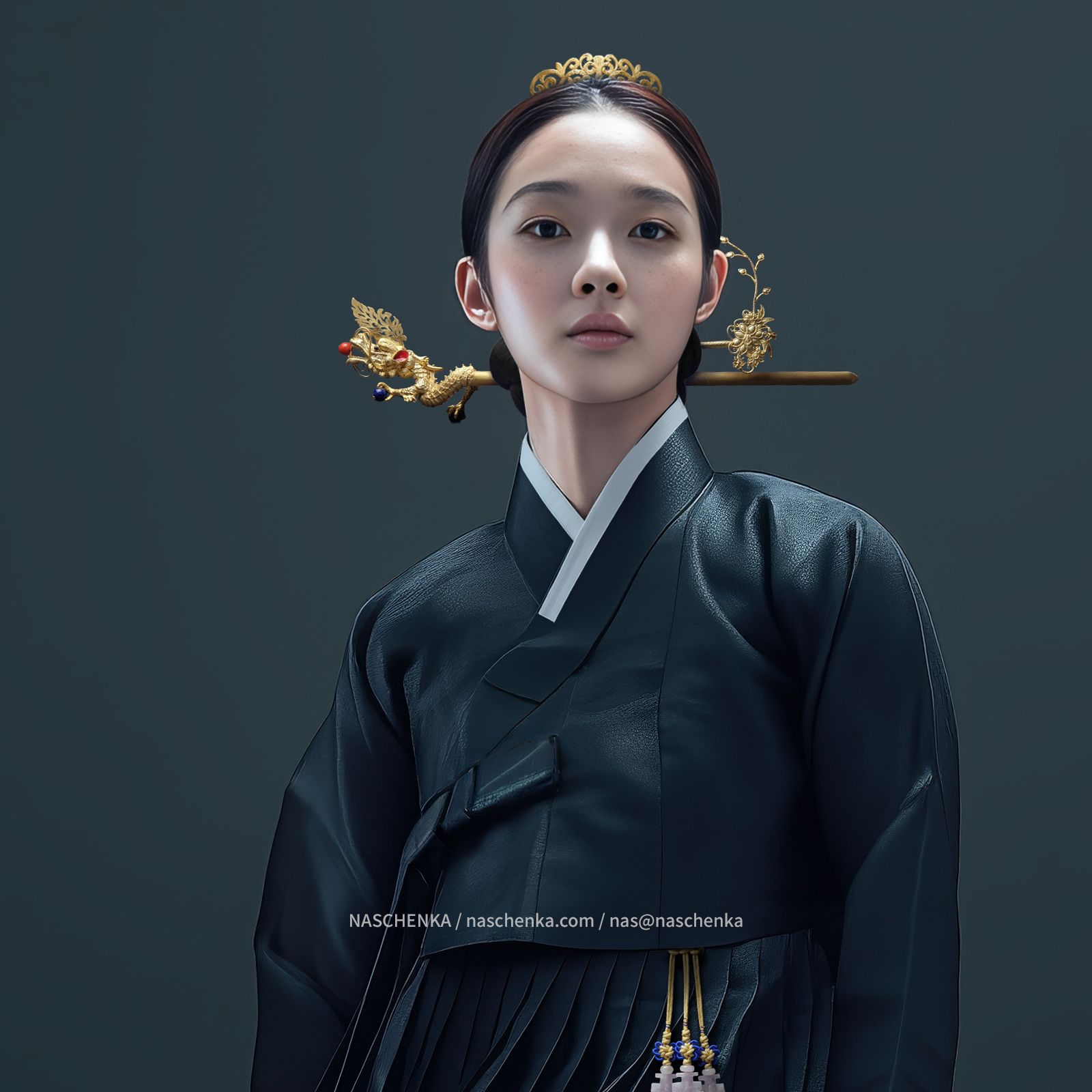
Most Korean heritage jewelry is worn in the hair, because the hair carried a woman's status. From late Joseon, a married woman wore her own hair in a low chignon, the jjok. A binyeo held it. Dwikkoji decorated it. At court, a cheopji on the parting showed rank, and for ceremony a jokduri or hwagwan crowned the head. Specialist guides: binyeo.com · dwikkoji.com · cheopji.com · jokduri.com.
The norigae
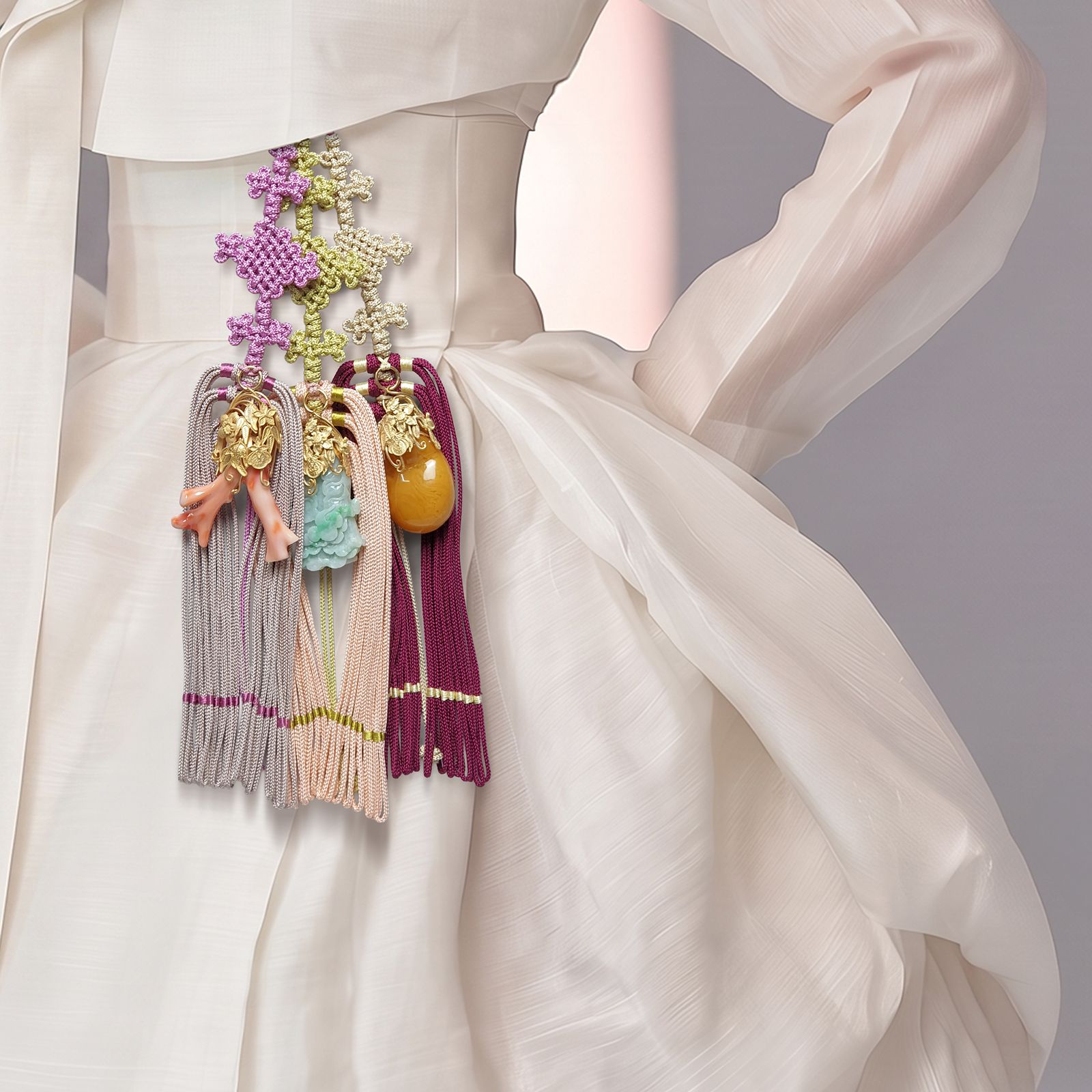
The norigae is the pendant of Korean dress, hung from the tie of the jacket or the waist of the skirt. A classic norigae has four parts — a top fitting, a main ornament, a knot and a silk tassel — and the grandest, the samjak, hangs three of them together. It was ornament and talisman at once. Specialist guide: norigae.co.kr.
Rings
The Korean ring of marriage is the garakji: two identical rings worn together. A single ring is a banji. At the Joseon court rings changed with the seasons — gold in winter, enamelled silver in spring, jade and agate in summer.
Earrings, necklaces, bracelets
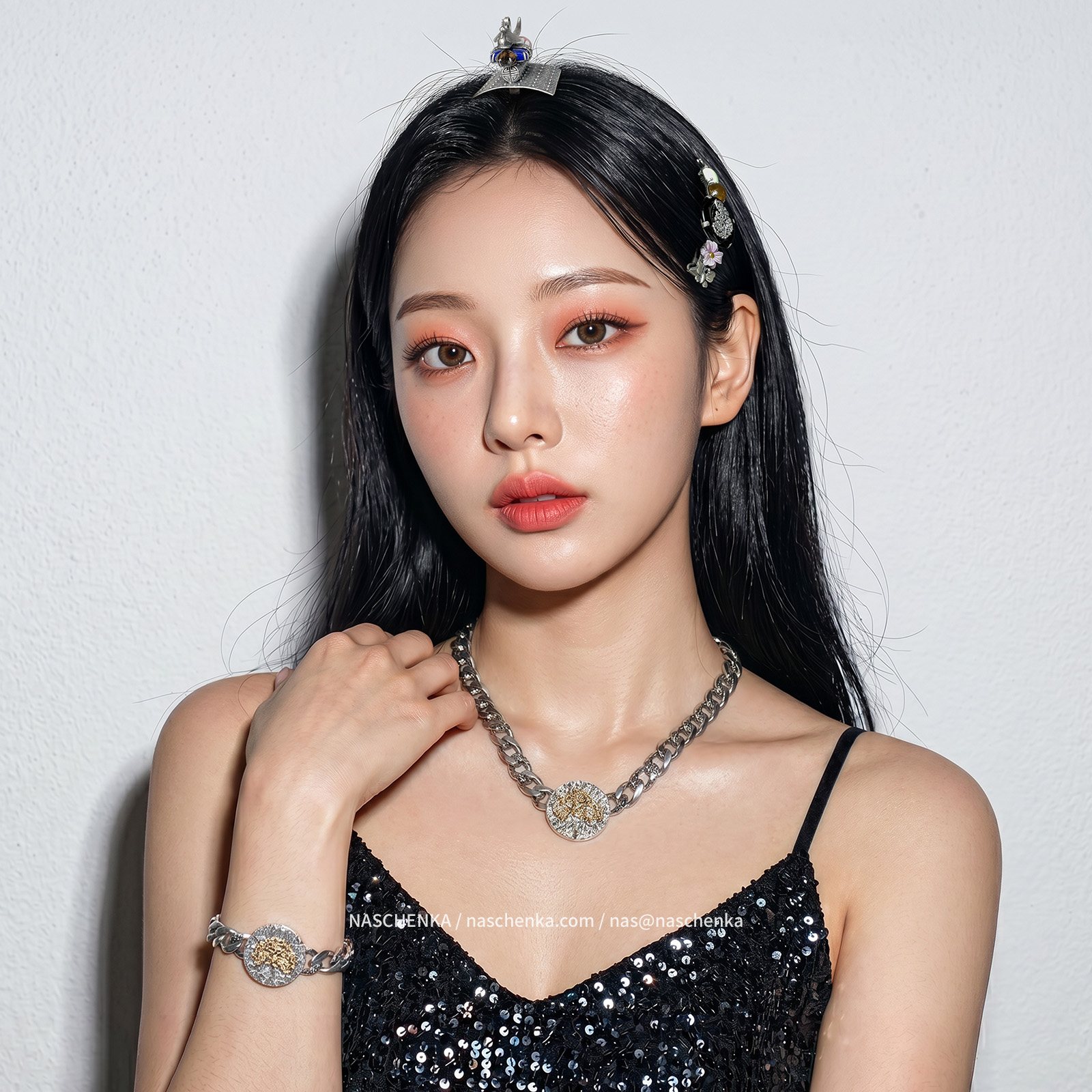
Korean heritage jewelry is not only for hanbok. Its oldest masterpieces are earrings, necklaces and bracelets: the gold earrings of the Silla royal tombs, the gold and jade gogok necklaces buried with Silla kings, the silver bracelets of King Muryeong's queen. Today the same craft — hand-worked silver, engraving and piercing, enamel, jadeite, coral and amber, the peony, the phoenix, the bat and the plum — makes earrings, necklaces, bracelets, rings and brooches that are worn every day and read, at a glance, as Korean. Korean heritage jewelry for every day →
Fifteen centuries, briefly
5th–6th c. Silla's gold crowns, belts and earrings, buried in the royal tombs of Gyeongju; the silver bracelets of King Muryeong's queen in Baekje, inscribed with the maker's name.
834 King Heungdeok of Silla regulates ornaments by rank.
Goryeo Court contact with the Yuan brings the headdress that becomes the jokduri.
Joseon Silver and restraint. Jewelry follows rank and season; the norigae flourishes.
1756 · 1788 The gache wig is banned; the low chignon, binyeo, cheopji and jokduri define women's formal hair.
1897–1910 The Korean Empire; the empress's dragon ornaments.
Today Weddings, dance, historical dramas — and jewelry worn every day.
Silver, stone and silk
Joseon jewelry was above all silver. Even royal gold was usually gilded silver: the National Palace Museum's gilt binyeo of the Consort of Imperial Prince Yeong are silver beneath. Stones were chosen for meaning as well as colour — jadeite, nephrite, coral, amber and pearl — with enamel for colour, and silk for the knots and tassels of the norigae. Materials and their meanings →
What it meant
Korean heritage jewelry spoke. Its motifs and materials showed rank (the dragon, phoenix and frog of the cheopji), marriage (the binyeo of the married woman, the paired garakji), protection (coral against misfortune) and wishes — longevity, many sons, wealth and honour.
Real or imitation?
Much that is sold as “Korean traditional jewelry” today is brass, plated alloy or polyester assembled from ready-made parts. The traditional standard is different: silver worked by hand, natural stones honestly described, silk tied by hand. How to tell →
Korean heritage jewelry today
It is worn at weddings and in the pyebaek, in court and folk dance, in historical dramas watched around the world — and, more and more, as everyday jewelry: one binyeo in a low bun, a cheopji on a centre parting, a norigae on a bag. How to wear it →
Quick answers
What is Korean heritage jewelry?
The traditional jewelry of Korean dress — hairpins (binyeo), hair ornaments (dwikkoji, cheopji), crowns (jokduri, hwagwan), pendants (norigae) and paired rings (garakji) — and the craft that makes them today.
Is Korean jewelry the same as Chinese or Japanese jewelry?
No. Korea shares some forms with its neighbours, but the binyeo through a low chignon, the norigae at the jacket tie, the cheopji on the parting and the paired garakji belong to Korean dress.
What is Korean heritage jewelry made of?
Traditionally silver, gilt silver and gold, set with jadeite, nephrite, coral, amber, pearl and enamel, with silk for knots and tassels.
Can I wear Korean heritage jewelry without hanbok?
Yes. Korean heritage jewelry includes earrings, necklaces, bracelets and rings made with traditional Korean craft and motifs, and a single binyeo, cheopji or norigae also works with modern clothes.
Does Korean heritage jewelry include earrings and necklaces?
Yes. Some of the oldest Korean masterpieces are earrings, necklaces and bracelets — from the Silla royal tombs and the tomb of King Muryeong — and today the same craft makes everyday jewelry.
Where can I buy authentic Korean heritage jewelry?
Look for 925 silver rather than brass, natural stones honestly described, and silk rather than polyester. NASCHENKA makes it by hand in Seoul at naschenka.com.
References
- Encyclopedia of Korean Culture (한국민족문화대백과사전), Academy of Korean Studies — entries on 비녀, 뒤꽂이, 첩지, 족두리, 화관, 노리개, 가락지, 떨잠, 댕기. encykorea.aks.ac.kr
- National Research Foundation of Korea, Dictionary of Korean Costume (한국복식사전), via Academy of Korean Studies Digital Humanities. dh.aks.ac.kr
- National Palace Museum of Korea — ornaments of the Consort of Imperial Prince Yeong, via Google Arts & Culture. artsandculture.google.com
- Gyeongju National Museum and Gongju National Museum — Silla gold ornaments and the finds from the tomb of King Muryeong.
- Sookmyung Women's University Museum — Joseon women's ornaments and hairstyles.